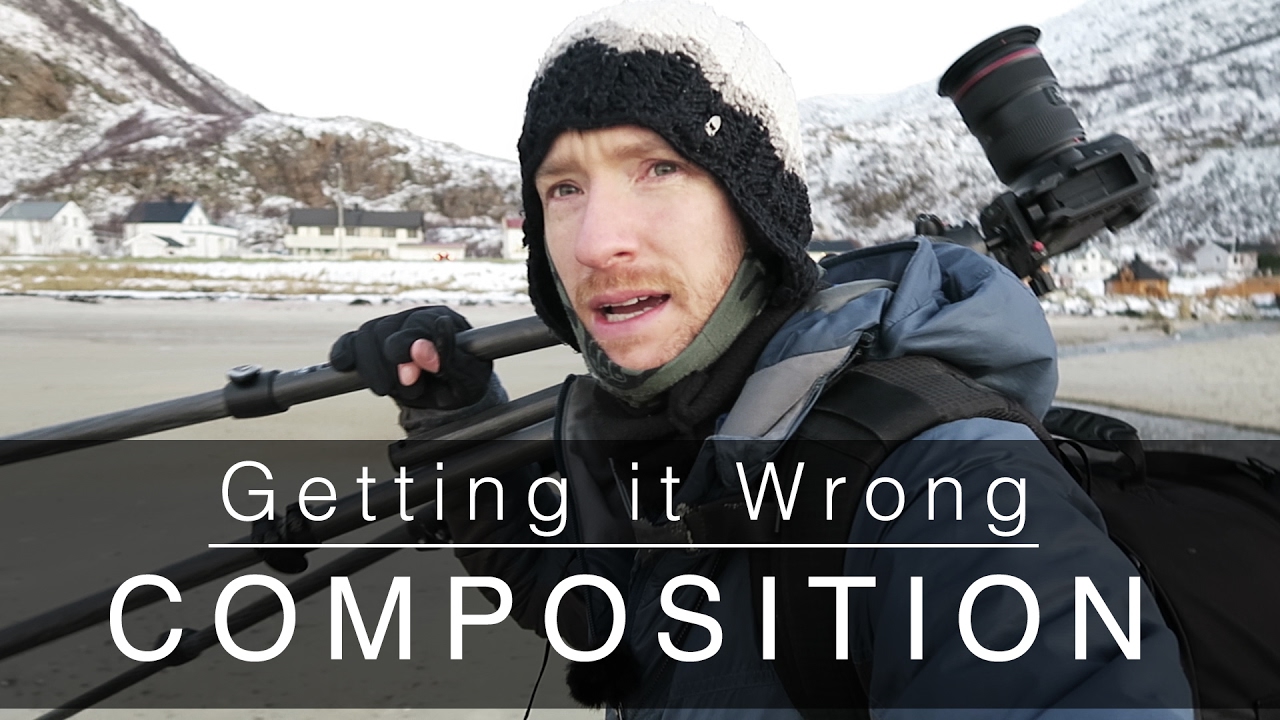
There’s a particular kind of frustration that only landscape photographers know. The light is extraordinary. The scene is genuinely beautiful. And you simply cannot find a composition that works. You’re standing there in conditions you drove hours to reach, burning through the golden minutes, and every frame you build feels wrong. I’ve been chasing landscapes for twenty years and that specific failure still gets me. It’s humbling every single time.
What makes Watch the full tutorial on YouTube this Thomas Heaton tutorial worth studying is that he doesn’t hide the failure. He lands in Tromsø, Northern Norway, takes a quick detour to a beach called Grøtfjord, finds gorgeous warm light raking across snow-capped mountains, and then cannot crack the composition. He shows you the bad image, explains exactly what went wrong, and then the video keeps going, because the night wasn’t finished. That arc, from problem to honest reckoning to unexpected reward, is about as honest a field report as you’ll find in outdoor photography content.
The lesson packed inside this short video isn’t really about Norway. It’s about reading a scene quickly, knowing when to commit and when to walk away, and staying present long enough to catch something you didn’t plan for. Here’s how to apply what Heaton demonstrates, step by step.
Step 1: Arrive and Take One Quick Test Shot to Calibrate the Scene
 Heaton at the beach checking sharpness on camera screen
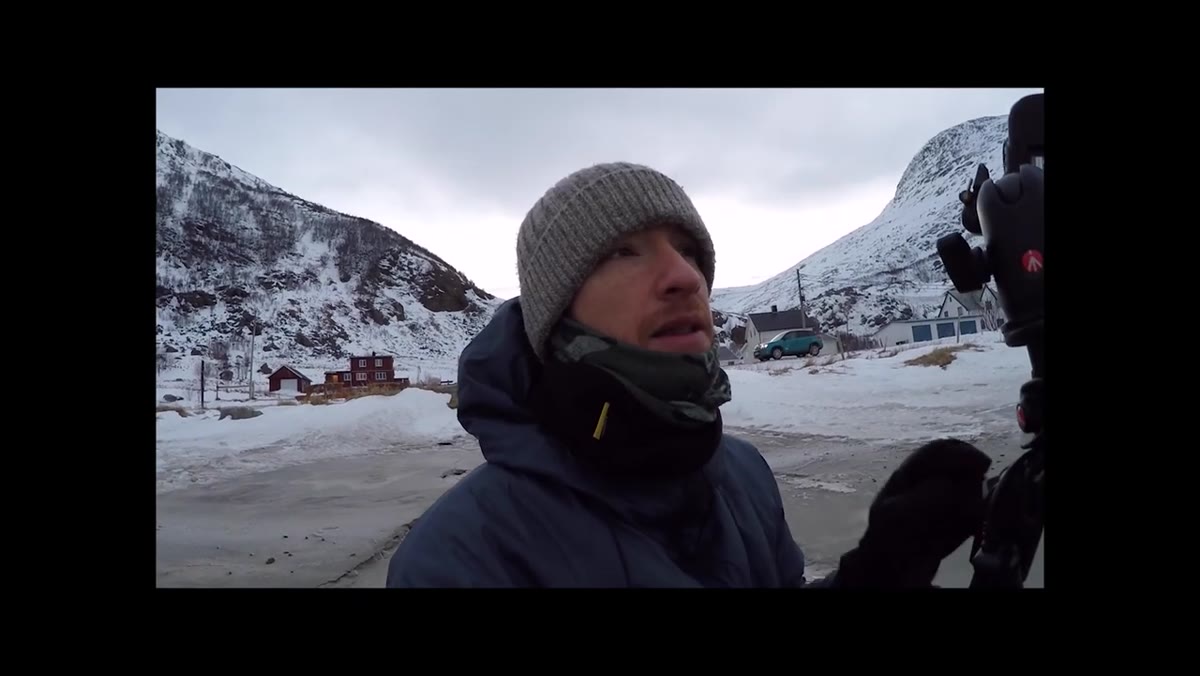
Before you start hunting for compositions, take a single frame to check basic technical quality. Heaton does this almost instinctively when he arrives at Grøtfjord. He confirms the image is sharp and well-exposed, then moves. This isn’t about getting a keeper. It’s about resetting your eye from the drive and making sure your gear is behaving. After a long travel day, I always do this too. Check your focus mode, confirm the horizon isn’t wildly tilted, see what the light is actually doing rather than what you thought it would be doing.
Heaton at the beach checking sharpness on camera screen
Before you start hunting for compositions, take a single frame to check basic technical quality. Heaton does this almost instinctively when he arrives at Grøtfjord. He confirms the image is sharp and well-exposed, then moves. This isn’t about getting a keeper. It’s about resetting your eye from the drive and making sure your gear is behaving. After a long travel day, I always do this too. Check your focus mode, confirm the horizon isn’t wildly tilted, see what the light is actually doing rather than what you thought it would be doing.
Step 2: Assess Whether the Location Suits the Light Direction
 Heaton looking around the beach, mountains behind him lit by sunset
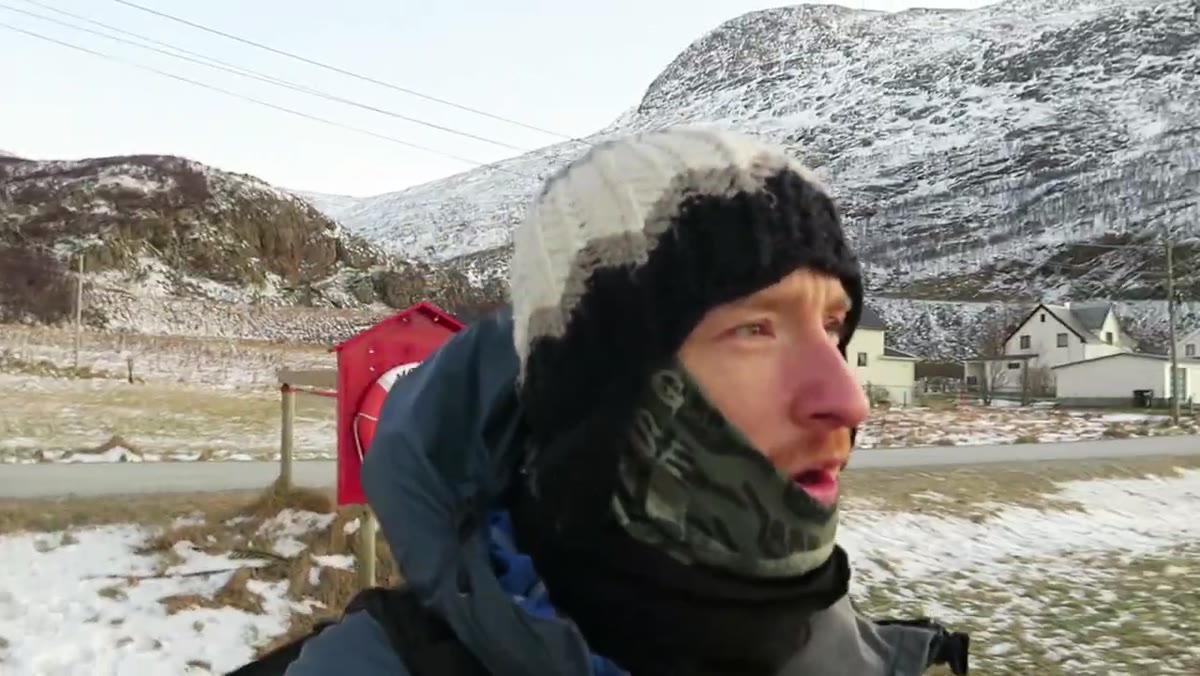
This is the step most photographers skip when they’re excited to shoot. Heaton walks the beach and quickly realizes the location faces the wrong direction for sunset. The warm light is landing beautifully on the mountains behind him, not in front of him. The postcard view is dark. The photogenic view is awkward to compose. Ask yourself: where is the light actually falling, and does this spot let me face into it or use it as a sidelight or backlight with intention? If the answer is no, you haven’t failed. You’ve gathered information. Adjust your position before you commit to a foreground.
Heaton looking around the beach, mountains behind him lit by sunset
This is the step most photographers skip when they’re excited to shoot. Heaton walks the beach and quickly realizes the location faces the wrong direction for sunset. The warm light is landing beautifully on the mountains behind him, not in front of him. The postcard view is dark. The photogenic view is awkward to compose. Ask yourself: where is the light actually falling, and does this spot let me face into it or use it as a sidelight or backlight with intention? If the answer is no, you haven’t failed. You’ve gathered information. Adjust your position before you commit to a foreground.
Step 3: Use a Natural Leading Line to Solve the Compositional Problem
 Heaton walking toward the stream flowing out across the beach
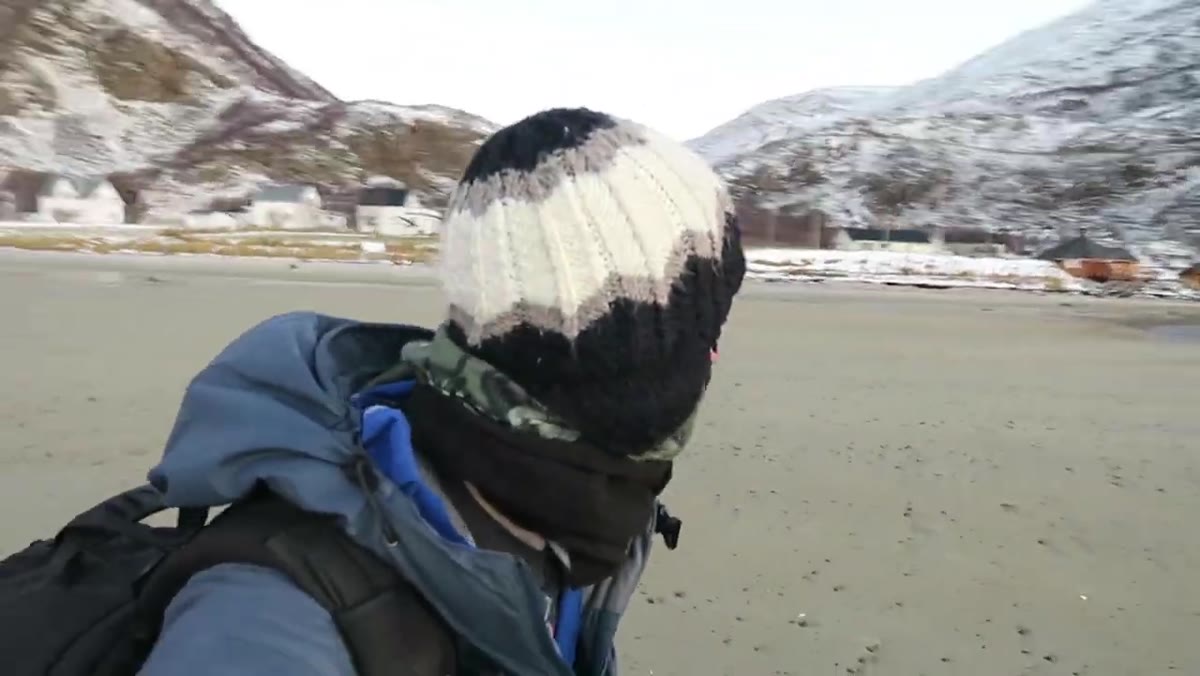
Heaton spots a small stream cutting across the sand toward the sea and immediately tries to recruit it as a leading line pointing toward the lit mountains. This is a sound instinct. Streams, riverbeds, shorelines, rock formations, and ridgelines all give the eye a path to travel. The goal is to find something in the foreground that directs attention toward your main subject. Get low, move laterally, and check whether the line actually terminates at the point of interest or just wanders off to the side. Heaton tries it here and it doesn’t quite work. But the instinct to look for that device is correct.
Heaton walking toward the stream flowing out across the beach
Heaton spots a small stream cutting across the sand toward the sea and immediately tries to recruit it as a leading line pointing toward the lit mountains. This is a sound instinct. Streams, riverbeds, shorelines, rock formations, and ridgelines all give the eye a path to travel. The goal is to find something in the foreground that directs attention toward your main subject. Get low, move laterally, and check whether the line actually terminates at the point of interest or just wanders off to the side. Heaton tries it here and it doesn’t quite work. But the instinct to look for that device is correct.
Step 4: Recognize When Eye Flow Is Working Against You, and Name the Problem
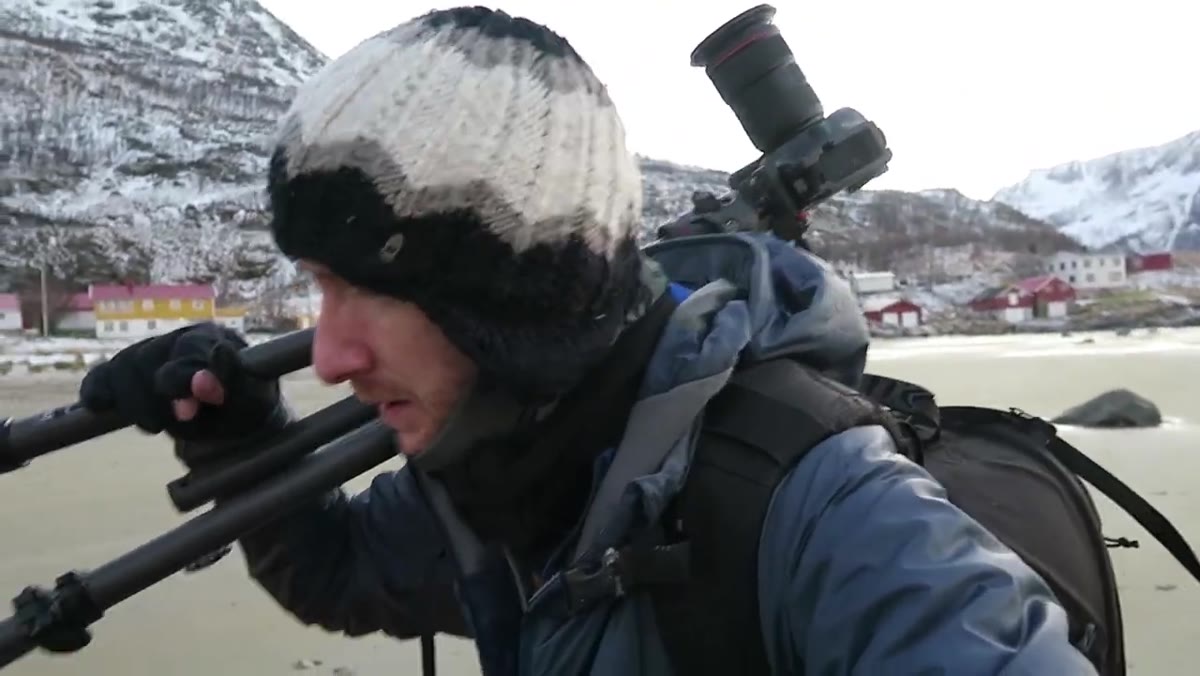 Heaton explaining why the composition failed, the eye pulls left
This is the most teachable moment in the video. Heaton reviews his shot and identifies the specific problem: every element in the frame was pulling the viewer’s eye to the left, while the actual subject, the lit mountains, was on the right. The image fought itself. Being able to name this, rather than just feeling like something is off, is what separates photographers who improve from ones who don’t. When a composition feels wrong, ask: where does the eye enter, where does it travel, and where does it land? If it’s landing in empty space or drifting away from the main subject, your lines are working against you. Sometimes the fix is moving three feet. Sometimes the location just doesn’t have a workable composition for the current light, and that’s the honest answer.
Heaton explaining why the composition failed, the eye pulls left
This is the most teachable moment in the video. Heaton reviews his shot and identifies the specific problem: every element in the frame was pulling the viewer’s eye to the left, while the actual subject, the lit mountains, was on the right. The image fought itself. Being able to name this, rather than just feeling like something is off, is what separates photographers who improve from ones who don’t. When a composition feels wrong, ask: where does the eye enter, where does it travel, and where does it land? If it’s landing in empty space or drifting away from the main subject, your lines are working against you. Sometimes the fix is moving three feet. Sometimes the location just doesn’t have a workable composition for the current light, and that’s the honest answer.
Step 5: Stay in the Field After You Think You’re Done
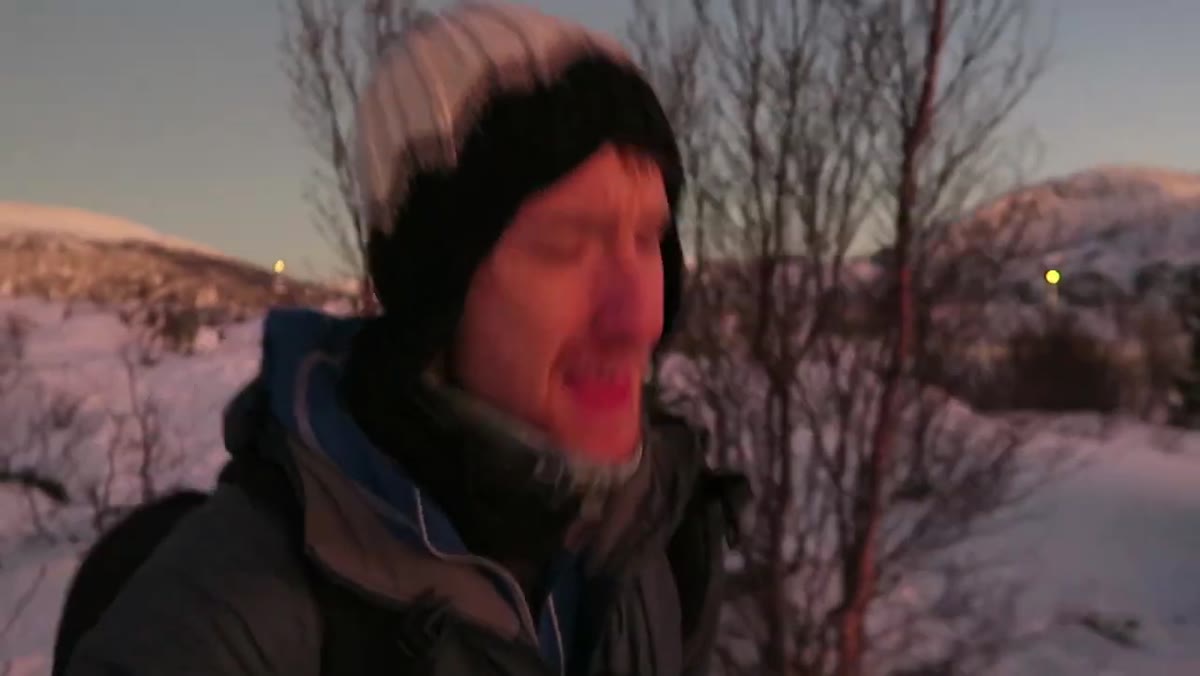 Heaton reacting to the unexpected post-sunset Arctic glow in the sky
This is the moment that redeems the whole session. Heaton wraps up, starts heading back, and the sky ignites. Not at sunset but after it, a pink and purple Arctic afterglow washing over the fjord and the valley. He grabs his camera and goes. The images he gets in those final minutes are, visually, extraordinary. Landscape photography rewards presence over planning. Your shot list is useful until it isn’t. Stay ten more minutes. Walk back by a different route. Keep looking behind you.
Heaton reacting to the unexpected post-sunset Arctic glow in the sky
This is the moment that redeems the whole session. Heaton wraps up, starts heading back, and the sky ignites. Not at sunset but after it, a pink and purple Arctic afterglow washing over the fjord and the valley. He grabs his camera and goes. The images he gets in those final minutes are, visually, extraordinary. Landscape photography rewards presence over planning. Your shot list is useful until it isn’t. Stay ten more minutes. Walk back by a different route. Keep looking behind you.
Step 6: Recognize the Difference Between Sunset and Afterglow
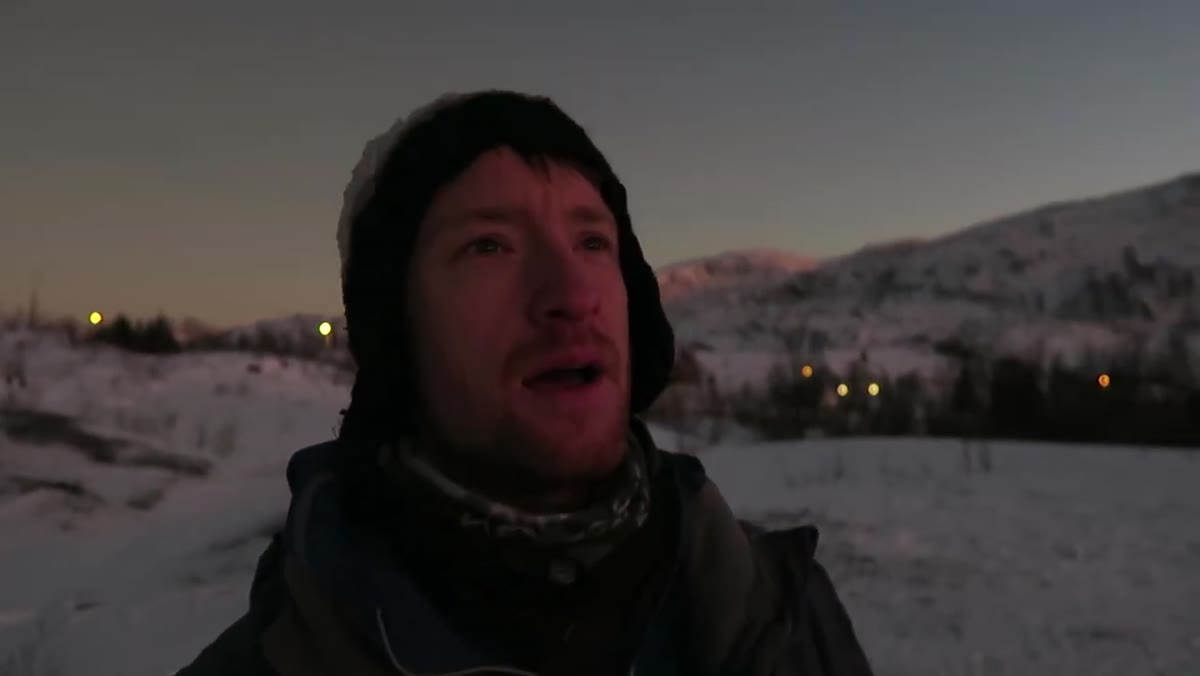 Wide shot of the glowing sky over the fjord from the hillside
Heaton explicitly names what he’s photographing: not the sunset itself but the Arctic afterglow, the diffuse pink light that can flood the sky fifteen to thirty minutes after the sun has dropped below the horizon. In high latitudes especially, this phase can outlast the main event in terms of visual drama. The light is softer, the color more saturated and even, and there are no harsh shadows. If you’re packing up the moment the sun disappears, you’re leaving before the second act. Set your alarm earlier than you think, or build in time to linger past the obvious moment.
Wide shot of the glowing sky over the fjord from the hillside
Heaton explicitly names what he’s photographing: not the sunset itself but the Arctic afterglow, the diffuse pink light that can flood the sky fifteen to thirty minutes after the sun has dropped below the horizon. In high latitudes especially, this phase can outlast the main event in terms of visual drama. The light is softer, the color more saturated and even, and there are no harsh shadows. If you’re packing up the moment the sun disappears, you’re leaving before the second act. Set your alarm earlier than you think, or build in time to linger past the obvious moment.
What I’d Add from My Own Experience
The thing Heaton demonstrates without quite spelling out is the difference between a location and a composition. They are not the same thing. Grøtfjord is a spectacular location. But a spectacular location only yields a great image when the light, the angle of view, and the internal geometry of the frame all agree. I’ve stood in places that looked like screensavers and come home with nothing usable, and I’ve pulled strong shots from unremarkable roadsides because the light found an interesting angle on ordinary rock. A mentor of mine used to say the mountain doesn’t care about your schedule. The location will give you what it gives you on that day. Your job is to read it fast, adapt, and stay humble enough to keep looking even when your first instinct was wrong.
The single thing to take from this video: when a composition refuses to work, don’t force it. Name why it’s failing, adjust or walk, and stay present for what comes after the obvious moment ends. Sometimes the best frame of the day happens when you’re walking back to the car.
Watch the full tutorial on YouTube and pay particular attention to how Heaton talks through his reasoning in real time. That habit, narrating the problem as you’re solving it, is worth developing on your own shoots.
Comments
Leave a Comment